- Your cart is empty
- Continue Shopping


Why Does Anxiety Cause Diarrhea? The Brain-Gut Connection & Fast Relief
- All meds
- Posted on
-
by @zohaib@007_123@
- 0 comments
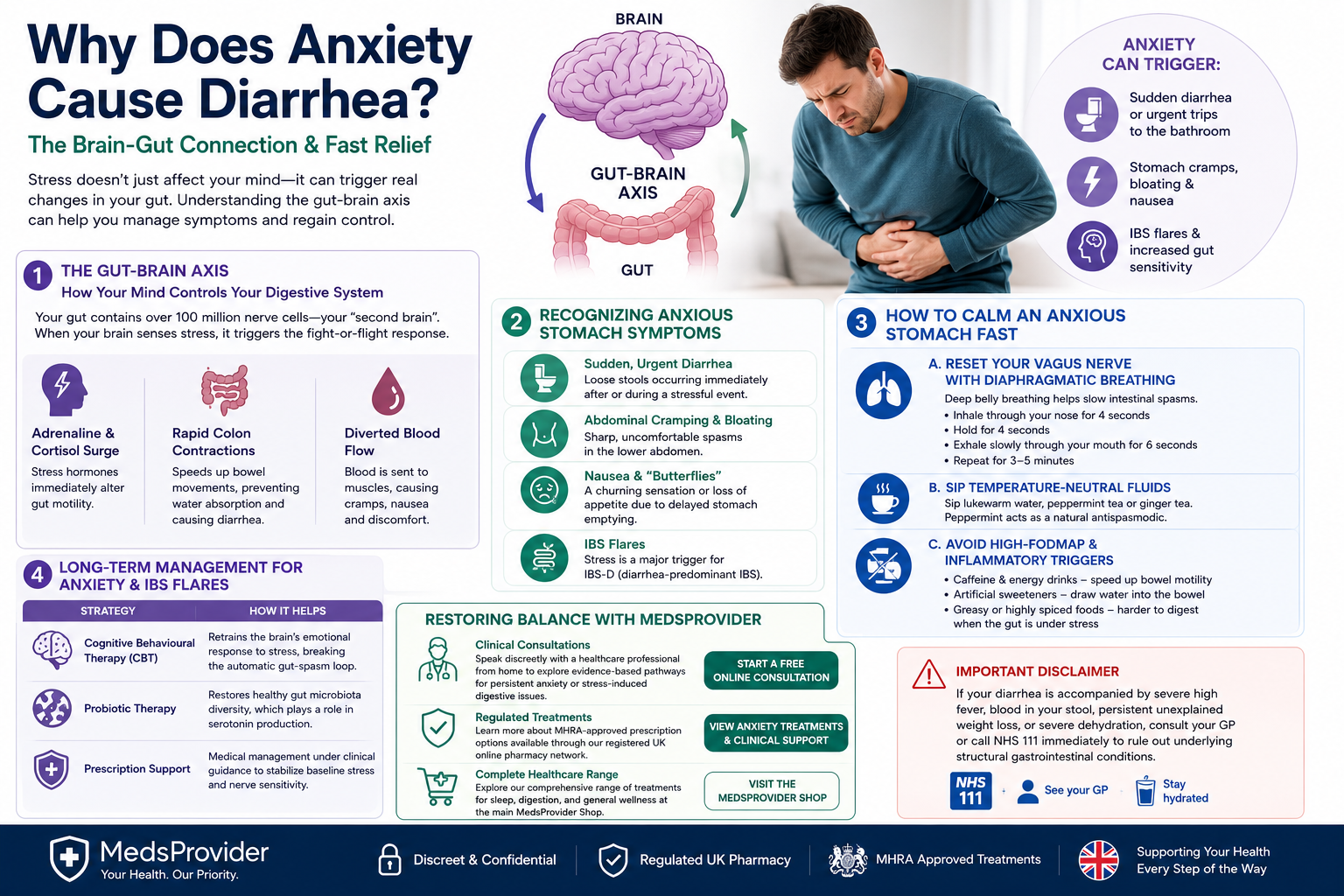
Table of Contents
It is one of the most common, embarrassing, and distressing physical symptoms of stress: you have an important presentation, an exam, or a sudden panic spike, and within minutes, your stomach churns, forcing a rushed trip to the bathroom.
If you have ever wondered why does anxiety cause diarrhea, you are far from alone. Search data shows that millions of UK adults experience severe digestive disruption alongside mental stress every day.
Understanding the physiological link between your mind and your digestive system—known as the gut-brain axis—can help you manage your symptoms, reduce anxiety-induced IBS flares, and regain control over your daily routine.
1. The Gut-Brain Axis: How Your Mind Controls Your Digestive System
To understand why anxiety causes diarrhea, you must look at how your nervous system communicates with your gastrointestinal tract. Your gut contains over 100 million nerve cells—an integrated network often referred to by neuroscientists as your “second brain” (the enteric nervous system).
When your brain perceives emotional stress, financial worry, or health anxiety, it triggers your body’s survival fight-or-flight mechanism. This causes a sudden flood of stress hormones:
- Adrenaline & Cortisol Surge: These hormones immediately alter gut motility.
- Rapid Colon Contractions: In a high-stress emergency, your sympathetic nervous system speeds up contractions in your lower intestines to clear out waste quickly, preventing proper water absorption and resulting in loose, watery stools or sudden diarrhea.
- Diverted Blood Flow: Your body diverts blood away from normal digestive processes and directs it toward major muscle groups to prepare you to fight or flee, causing stomach cramping and nausea.
2. Recognizing Anxious Stomach Symptoms
Anxiety affects everyone differently, but gastrointestinal reactions tend to follow a predictable pattern. The most common anxious stomach symptoms reported by patients include:
- Sudden, Urgent Diarrhea: Loose stools occurring immediately after or during a stressful event.
- Abdominal Cramping & Bloating: Sharp, uncomfortable spasms in the lower abdomen.
- Nausea & “Butterflies”: A churning sensation or loss of appetite caused by delayed stomach emptying.
- Irritable Bowel Syndrome (IBS) Flares: Stress is one of the primary triggers for pre-existing IBS-D (diarrhea-predominant IBS).
3. How to Calm an Anxious Stomach Fast
When you are caught in a cycle of anxiety and digestive distress, the fear of having diarrhea often creates a secondary surge of panic, making the physical symptoms worse.
If you are experiencing an acute flare-up, use these evidence-based techniques on how to calm an anxious stomach:
A. Reset Your Vagus Nerve with Diaphragmatic Breathing
Shallow breathing keeps your body locked in fight-or-flight mode. Deep belly breathing stimulates the vagus nerve, sending a direct signal to your parasympathetic nervous system to slow down intestinal spasms.
- Sit comfortably with one hand on your belly.
- Inhale through your nose for 4 seconds, feeling your stomach expand.
- Hold for 4 seconds.
- Exhale slowly through your mouth for 6 seconds.
- Repeat for 3 to 5 minutes until abdominal cramping softens.
B. Sip Temperature-Neutral Fluids
Rapidly gulping ice-cold water can trigger additional stomach contractions. Instead, slowly sip lukewarm water, peppermint tea, or ginger tea. Peppermint acts as a natural antispasmodic, relaxing the smooth muscle wall of the gut.
C. Avoid High-FODMAP & Inflammatory Triggers
When your gut is sensitive due to elevated cortisol, avoid food and drinks that irritate the digestive lining:
- Caffeine & Energy Drinks: Stimulants directly speed up bowel motility.
- Artificial Sweeteners: Sorbitol and xylitol draw excess water into the bowel.
- Greasy or Highly Spiced Foods: Difficult to break down during reduced blood flow to the gut.
4. Long-Term Management for Anxiety and IBS Flares
If you find that stress routinely triggers digestive distress, treating the physical symptom alone is only half the battle. Long-term management requires addressing the baseline anxiety that drives the physical response.
| Strategy | How It Helps |
| Cognitive Behavioural Therapy (CBT) | Retrains the brain’s emotional response to stress, breaking the automatic gut-spasm loop. |
| Probiotic Therapy | Restores healthy gut microbiota diversity, which plays a role in serotonin production. |
| Prescription Support | Medical management under clinical guidance to stabilize baseline stress and nerve sensitivity. |
Restoring Balance with MedsProvider
Living with constant fear of stomach distress or sudden digestive emergencies can significantly impact your confidence, work life, and social independence.
At MedsProvider, we offer a confidential, regulated UK healthcare environment to help you manage your physical and mental health comprehensively:
- Clinical Consultations: Speak discreetly with a healthcare professional from home to explore evidence-based pathways for persistent anxiety or stress-induced digestive issues. Start a Free Online Consultation.
- Regulated Treatments: Learn more about MHRA-approved prescription options available through our registered UK online pharmacy network. View Anxiety Treatments & Clinical Support.
- Complete Healthcare Range: Explore our comprehensive range of treatments for sleep, digestion, and general wellness at the main MedsProvider Shop.
Disclaimer: If your diarrhea is accompanied by severe high fever, blood in your stool, persistent unexplained weight loss, or severe dehydration, consult your GP or call NHS 111 immediately to rule out underlying structural gastrointestinal conditions.
1. Why does anxiety cause sudden diarrhea?
When you experience anxiety or panic, your brain activates your “fight-or-flight” stress response. This triggers a surge of adrenaline and cortisol, which accelerates muscular contractions in your colon (hyper-motility). Because waste moves through your intestines too quickly for proper water absorption, it leads to sudden, loose, or watery stools.
2. What are the most common anxious stomach symptoms?
Common anxious stomach symptoms caused by the gut-brain axis include:
Sudden, urgent diarrhea or loose stools
Lower abdominal cramping and bloating
Nausea or a “knot” in the stomach
Loss of appetite
Stress-induced Irritable Bowel Syndrome (IBS) flare-ups
How can I stop anxiety diarrhea fast?
To calm an anxious stomach quickly:
Practice Diaphragmatic Breathing: Inhale for 4 seconds, hold for 4, and exhale for 6 seconds to stimulate your vagus nerve and slow intestinal spasms.
Sip Peppermint or Ginger Tea: Peppermint acts as a natural antispasmodic to relax gut muscles.
Avoid Trigger Ingestibles: Stay away from caffeine, alcohol, artificial sweeteners, and greasy foods during panic spikes.
Can anxiety cause IBS-like symptoms every day?
Yes. Living with chronic background anxiety or Generalised Anxiety Disorder (GAD) keeps your baseline stress hormones elevated. This continuous nerve stimulation can cause ongoing gut sensitivity, daily stomach cramping, and frequent IBS-D (diarrhea-predominant) symptoms even when you don’t feel mentally panicked.
When should I see a doctor about stress-related stomach issues?
While stress-induced diarrhea is very common, you should consult a doctor or call NHS 111 if your digestive symptoms are accompanied by:
Blood in your stool or dark, tarry stools
Unexplained weight loss
Severe, persistent abdominal pain
A high fever or signs of severe dehydration
