- Your cart is empty
- Continue Shopping


Mixed Anxiety and Depressive Disorder UK (2026): Treatments & Private Prescription Guide
- All meds
- Posted on
-
by @zohaib@007_123@
- 0 comments
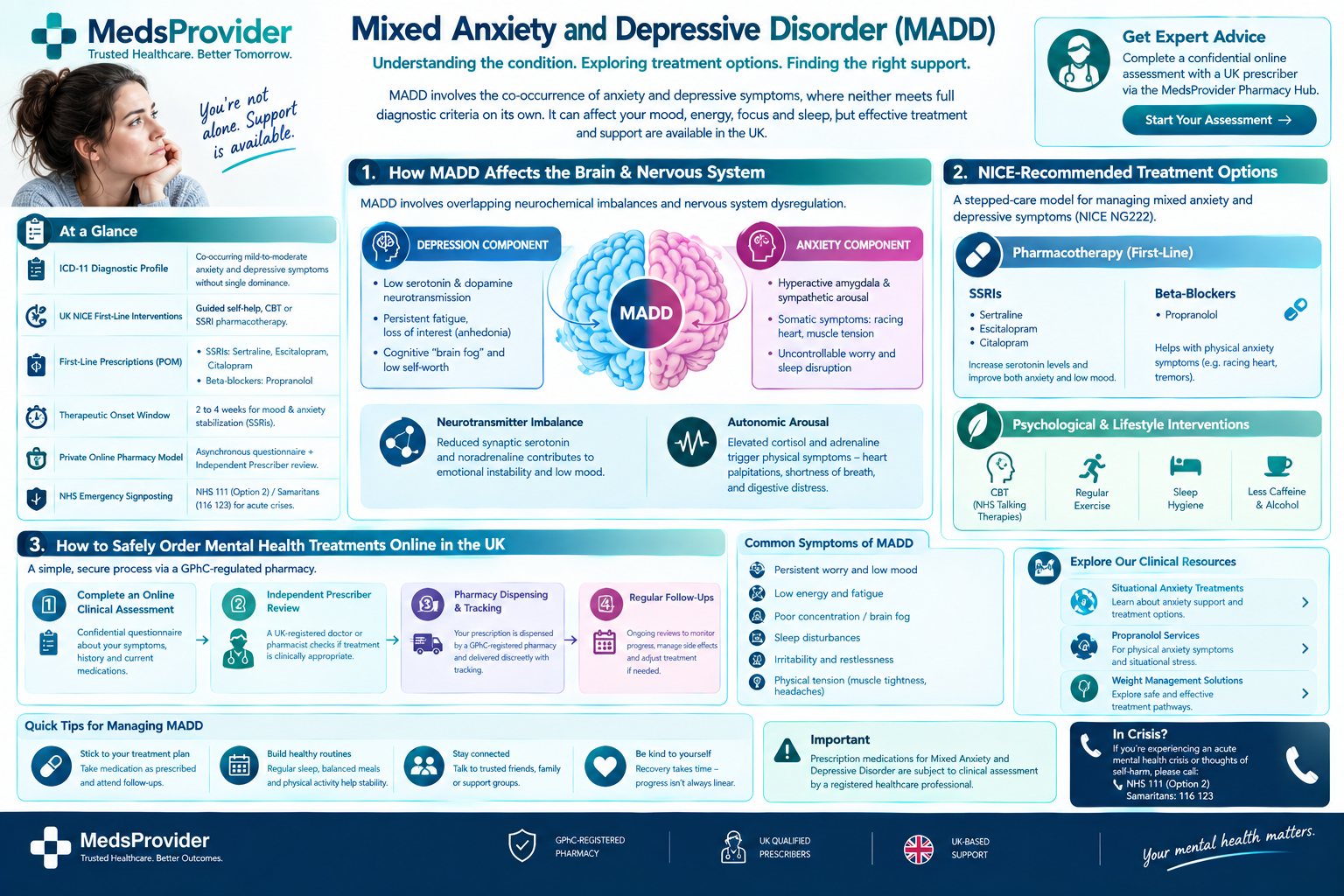
Mixed Anxiety and Depressive Disorder (MADD) is one of the most common primary care presentations in the UK. Characterised by simultaneous symptoms of persistent worry and low mood—where neither condition individually meets full diagnostic criteria for isolated Generalised Anxiety Disorder (GAD) or Major Depressive Disorder—MADD can significantly disrupt daily focus, energy, and sleep.
For UK patients seeking medical support via NHS pathways or GPhC-registered private digital pharmacies, understanding NICE-recommended treatment guidelines, first-line prescription options, and online consultation workflows helps put your recovery plan into clear perspective.
Mixed Anxiety and Depressive Disorder: At a Glance
| Feature | Details & Clinical Guidance |
| ICD-11 Diagnostic Profile | Co-occurring mild-to-moderate anxiety and depressive symptoms without single dominance |
| UK NICE First-Line Interventions | Guided self-help, Cognitive Behavioural Therapy (CBT), or SSRI pharmacotherapy |
| First-Line Prescriptions (POM) | SSRIs: Sertraline, Escitalopram, Citalopram Beta-blockers (Symptom Relief): Propranolol |
| Therapeutic Onset Window | 2 to 4 weeks for mood & anxiety stabilization (SSRIs) |
| Private Online Pharmacy Model and share a screenshot once you’ve made the payment. I’ll confirm it with my friend. | Asynchronous clinical questionnaire + Independent Prescriber review |
| NHS Emergency Signposting | NHS 111 (Option 2) / Samaritans (116 123) for acute crises |
1. How MADD Affects the Brain & Nervous System
MADD involves overlapping neurochemical imbalances and nervous system dysregulation:
┌─────────────────────────────────────────────────────────┐
│ DEPRESSIVE COMPONENT                                   │
├─────────────────────────────────────────────────────────┤
│ • Low serotonin & dopamine neurotransmission            │
│ • Persistent fatigue, loss of interest (anhedonia)       │
│ • Cognitive "brain fog" and low self-worth              │
└─────────────────────────────────────────────────────────┘
                            ▲
                            │ Overlapping Neurochemical Dysregulation
                            ▼
┌─────────────────────────────────────────────────────────┐
│ ANXIETY COMPONENT                                       │
├─────────────────────────────────────────────────────────┤
│ • Hyperactive amygdala & sympathetic arousal            │
│ • Somatic symptoms: racing heart, muscle tension       │
│ • Uncontrollable worry and sleep disruption             │
└─────────────────────────────────────────────────────────┘
- Neurotransmitter Imbalance: Reduced synaptic availability of serotonin and noradrenaline contributes directly to emotional instability, irritability, and low mood resilience.
- Autonomic Arousal: Elevated cortisol and adrenaline trigger physical manifestations of anxiety—such as heart palpitations, shortness of breath, and digestive distress—alongside low energy.
2. NICE-Recommended Clinical Treatment Options
NICE guidelines (NG222) advocate a stepped-care model for managing mixed anxiety and depressive symptoms:
First-Line Pharmacotherapy (SSRIs & Beta-Blockers)
- Selective Serotonin Reuptake Inhibitors (SSRIs): Medications such as Sertraline or Escitalopram serve as first-line prescription choices. SSRIs increase synaptic serotonin levels, addressing both anxious apprehension and low mood over a 2- to 6-week window.
- Beta-Blockers for Somatic Anxiety: Propranolol is frequently prescribed to manage physical anxiety triggers—such as rapid heart rate and tremors—providing situational relief alongside long-term mood stabilisers.
Psychological & Lifestyle Interventions
- NHS Talking Therapies (CBT): Cognitive Behavioural Therapy helps reframe negative thought cycles and behavioral avoidance patterns.
- Lifestyle Adjustments: Integrating structured aerobic exercise, sleep hygiene, and minimizing caffeine/alcohol intake reinforces pharmacological recovery.
- Understanding Body Signals: Learn more about how physical stress correlates with mood in our detailed guide on why anxiety causes nausea or explore mechanisms behind anxiety-induced brain fog.
3. How to Safely Order Mental Health Treatments Online in the UK
If you prefer private medical assessment and home delivery via a GPhC-regulated pharmacy, follow this safety pathway:
1.1. Complete an Online Clinical Assessment:Confidential assessment.
Fill out a confidential medical questionnaire detailing your current symptoms, duration, medical history, and any concurrent medications.
2.2. Independent Prescriber Review:GPhC clinician evaluation.
A UK-registered doctor or pharmacist independent prescriber reviews your assessment to determine whether medication (e.g., an SSRI or beta-blocker) is clinically appropriate.
3.3. Pharmacy Dispensing & Tracking:Discreet UK delivery.
Once approved, your electronic prescription is dispensed by a GPhC-registered pharmacy and shipped via tracked, discreet packaging.
4.4. Regular Progress Follow-Ups:Ongoing support.
Participate in scheduled follow-up assessments to evaluate symptom stabilization, manage initial side effects, or adjust dosing as needed.
Access Regulated Mental Healthcare at MedsProvider
At MedsProvider, we connect UK patients with discreet, fully compliant digital healthcare solutions and MHRA-approved prescription support:
- Mental Health & Wellness Hubs: Explore confidential clinical assessment pathways via our Anxiety Care Hub and Sleep Care Hub.
- Weight & Metabolic Health Hub: Review our comprehensive guides on licensed metabolic treatments, including our Mounjaro vs. Wegovy Comparison and Mounjaro UK Price Breakdown.
- Professional Consultations: Speak confidentially with a registered UK healthcare clinician to evaluate medication suitability. Start a Free Online Consultation.
- Full Pharmacy Catalog: Browse our full selection of GPhC-regulated pharmacy care at the MedsProvider Online Shop.
Disclaimer: Prescription medications for Mixed Anxiety and Depressive Disorder are subject to clinical assessment by a registered healthcare professional. If you are experiencing an acute mental health crisis or thoughts of self-harm, please call NHS 111 (Option 2), contact your local GP, or call Samaritans on 116 123 immediately.
https://medsprovider.co.uk/quantity/100-tablets
