- Your cart is empty
- Continue Shopping


Why Does Anxiety Cause Excessive Sweating & Chills? Causes & Relief
- All meds
- Posted on
-
by @zohaib@007_123@
- 0 comments
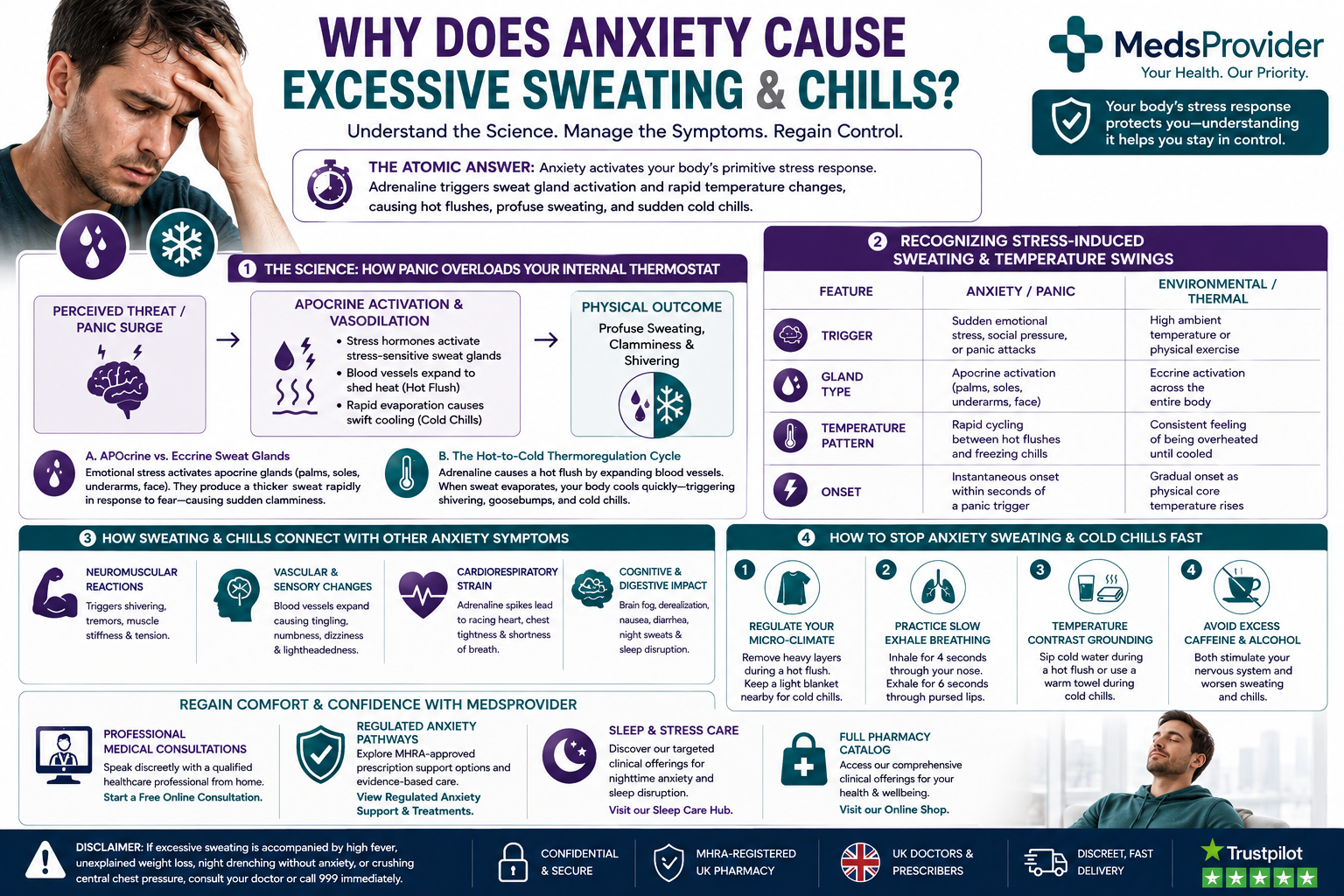
You are preparing for an important meeting, sitting in a crowded space, or relaxing at home when your palms suddenly turn clammy. Within seconds, beads of sweat form on your forehead, neck, or underarms—followed almost immediately by a wave of freezing cold shivers that makes you shake.
If you have ever wondered why does anxiety cause excessive sweating and cold chills, you are experiencing your body’s primitive built-in cooling and temperature regulation system firing under intense psychological stress.
Nervous sweating and sudden chills can feel deeply embarrassing and physically distressing. Because dripping with sweat or shivering uncontrollably can trigger self-consciousness and health anxiety, the physical discomfort often fuels further panic. Understanding how stress alters your internal thermostat gives you the tools to manage these uncomfortable temperature swings.
1. The Science: How Panic Overloads Your Internal Thermostat
Anxiety-induced sweating (hyperhidrosis) and sudden cold chills are governed by your hypothalamus—the brain’s master control center for body temperature—and your sympathetic nervous system.
┌─────────────────────────────────────────────────────────┐
│ PERCEIVED THREAT / PANIC SURGE                          │
└───────────────────────────┬─────────────────────────────┘
                            │
                            ▼
┌─────────────────────────────────────────────────────────┐
│ APOCRINE ACTIVATION & VASODILATION                      │
│ • Stress hormones activate stress-sensitive sweat glands│
│ • Blood vessels expand to shed heat (Hot Flush)         │
│ • Rapid evaporation causes swift cooling (Cold Chills)  │
└───────────────────────────┬─────────────────────────────┘
                            │
                            ▼
┌─────────────────────────────────────────────────────────┐
│ PHYSICAL OUTCOME: Profuse Sweating, Clamminess & Shivering│
└───────────────────────────┴─────────────────────────────┘
A. Apocrine vs. Eccrine Sweat Glands
When you sweat due to physical heat or exercise, your body uses eccrine glands to produce mostly water. However, under emotional stress or panic, adrenaline stimulates apocrine glands (located primarily in the underarms, face, palms, and groin). Apocrine sweat is thicker and produced rapidly in response to fear, resulting in sudden clammy hands and facial sweating.
B. The Hot-to-Cold Thermoregulation Cycle
During a surge of adrenaline, your central nervous system dilates blood vessels near the surface of your skin to cool your body down in preparation for physical exertion. This causes a sudden hot flush.
However, as that layer of sweat rapidly evaporates from your skin in a cool room, your body surface temperature drops abruptly. Your brain interprets this rapid cooling as a cold environment, triggering shivering, goosebumps, and severe cold chills.
2. Recognizing Stress-Induced Sweating & Temperature Swings
Anxiety-induced thermoregulatory symptoms present with specific characteristics:
| Symptom Feature | Anxiety / Panic Sweating | Environmental or Thermal Sweating |
| Trigger | Sudden emotional stress, social pressure, or panic attacks | High ambient room temperature or physical exercise |
| Gland Type | Apocrine activation (palms, soles, underarms, face) | General eccrine activation across the entire body |
| Temperature Pattern | Rapid cycling between burning hot flushes and freezing chills | Consistent sensation of being overheated until cooled |
| Onset | Instantaneous onset within seconds of a panic trigger | Gradual onset as physical core temperature rises |
3. How Sweating & Chills Connect with Other Anxiety Symptoms
Thermoregulatory distress is closely linked with the full spectrum of somatic panic symptoms:
- Neuromuscular Reactions: Cold chills often trigger involuntary shivering that mirrors anxiety tremors and shaking as well as painful muscle stiffness.
- Vascular & Sensory Changes: Sudden blood vessel expansion is frequently accompanied by tingling and numbness in the extremities and lightheadedness or dizziness.
- Cardiorespiratory Strain: Rapid adrenaline spikes cause racing heart palpitations, chest tightness, and anxiety-induced shortness of breath.
- Cognitive & Digestive Impact: Severe temperature spikes often coincide with brain fog and derealization, anxious stomach nausea, stress-induced diarrhea, and nighttime night sweats and sleep disruption.
4. How to Stop Anxiety Sweating & Cold Chills Fast
When temperature swings strike, use these practical steps to stabilize your nervous system:
1.1. Regulate Your Micro-Climate with Breathable Layers:Immediate physical adjustments (0 – 2 minutes).
Remove heavy outer layers during a hot flush, but keep a soft blanket or light jacket nearby. When the evaporative cold chills kick in moments later, cover your chest and arms to prevent violent shivering.
2.2. Practice Slow Exhale Breathing:1 to 3 minutes.
Inhale through your nose for 4 seconds and exhale through pursed lips for 6 seconds. Slow, rhythmic respiration reduces sympathetic drive, signaling your hypothalamus to normalize perspiration rates.
3.3. Temperature Contrast Grounding:2 to 4 minutes.
Sip cold water during a hot flush, or place a warm dry towel over your neck during cold chills. Stabilizing peripheral skin temperature dampens the sensory panic loop.
4.4. Avoid Excess Caffeine & Alcohol:Post-flare recovery.
Both caffeine and alcohol stimulate central nervous system activity and expand blood vessels, significantly worsening nervous sweating and night chills.
Regain Comfort & Confidence with MedsProvider
If recurring cold sweats, excessive nervous sweating, or health anxiety are affecting your daily confidence, work life, or peace of mind, getting regulated medical support is a safe, proactive step.
At MedsProvider, we offer confidential, fully regulated UK digital healthcare services to help manage your physical and emotional health:
- Professional Medical Consultations: Speak discreetly with a qualified healthcare professional from home to evaluate panic disorders, hyperhidrosis, and stress symptoms. Start a Free Online Consultation.
- Regulated Anxiety Pathways: Explore MHRA-approved prescription support options and evidence-based care managed through our registered UK online pharmacy network. View Regulated Anxiety Support & Treatments.
- Sleep & Stress Care: Discover our targeted clinical offerings for nighttime anxiety and sleep disruption at our Sleep Care Hub.
- Full Pharmacy Catalog: Access our comprehensive clinical offerings at the main MedsProvider Online Shop.
Disclaimer: If excessive sweating is accompanied by high fever, unexplained weight loss, night drenching without anxiety, or crushing central chest pressure, consult your doctor or call 999 immediately.
